Metallic Epoxy Flooring in McKinney, TX
Transform your concrete floors with durable, attractive, and easy-to-maintain epoxy flooring in McKinney, TX—professionally installed for lasting performance in homes, garages, businesses, warehouses, showrooms, and commercial spaces.
Call Us: 1-800-Got-Divi
Metallic Epoxy Flooring in McKinney, TX
McKinney Epoxy Flooring Pros provides metallic epoxy flooring solutions for property owners who want to improve the appearance, usability, and protection of concrete surfaces in McKinney, TX. Metallic epoxy flooring is primarily chosen for visual impact. It can create depth, movement, and a one-of-a-kind appearance while retaining the seamless characteristics of a resinous floor system. The best results begin with a careful look at the concrete itself, followed by a coating system selected for the space rather than a one-size-fits-all product.
McKinney is a fast-growing North Texas community with a mix of newer homes, established neighborhoods, retail properties, offices, service businesses, and industrial spaces. That variety creates very different flooring needs. A residential garage may prioritize easy cleanup and decorative appeal, while a business floor may need abrasion resistance, traction, fast return to service, or compatibility with frequent cleaning. Metallic floors are intentionally variable. Pigments move while the coating is wet, and application technique influences the final pattern. Customers should expect an artistic finish rather than an exact printed repeat or a perfectly predictable sample match.
A quality floor-coating project is more than applying resin to concrete. Surface preparation, moisture conditions, repairs, material compatibility, layer thickness, cure windows, temperature, and finishing details all influence performance. This page explains what to consider when evaluating metallic epoxy flooring in McKinney and how to compare options intelligently.
Professional Metallic Epoxy Flooring Services in McKinney
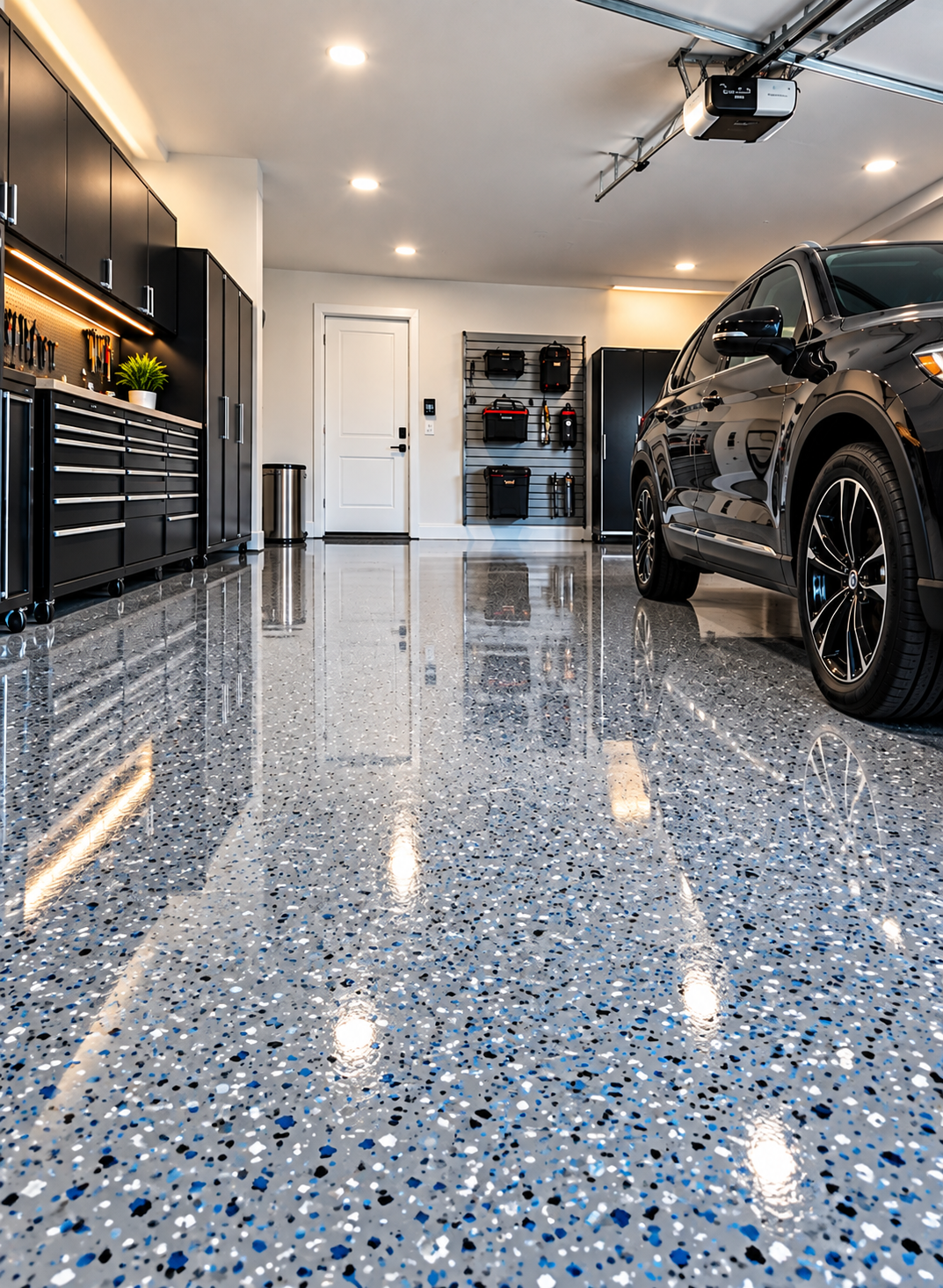
Professional metallic epoxy flooring typically begin with an assessment of the existing slab and the intended use of the space. Common applications include showrooms, studios, salons, offices, entertainment spaces, finished garages, hobby rooms, select retail environments, and residential interiors where a dramatic seamless concrete finish is desired. A contractor should ask how the floor is used today, what problems need to be solved, and what appearance the customer wants before recommending a system.
Concrete is porous and can contain cracks, surface laitance, curing compounds, sealers, oil, grease, paint, adhesives, or other contaminants. These conditions matter because a coating needs a sound, properly prepared substrate to bond reliably. Mechanical preparation such as diamond grinding or shot blasting is commonly used to create an appropriate concrete surface profile, while repairs and cleaning address defects and contamination.
System design may include marbled effects, flowing color transitions, pearlescent pigments, subtle two-tone
movement, high-contrast artistic designs, gloss clear coats, and protective topcoats selected for traffic and light
exposure. The appropriate combination depends on the environment. Color and finish are important, but they should be considered alongside sunlight exposure, vehicle or equipment traffic, expected chemicals, moisture, cleaning methods, desired traction, and the amount of downtime available for installation and curing.
Benefits of Metallic Epoxy Flooring

Metallic epoxy flooring is primarily chosen for visual impact. It can create depth, movement, and a one-of-a-kind
appearance while retaining the seamless characteristics of a resinous floor system.
A seamless resinous floor can also simplify routine maintenance because there are fewer joints and porous surface areas to trap dust and spills. Depending on the system, coatings can add abrasion resistance, improve resistance to common household or workplace chemicals, brighten a space through a reflective finish, and provide a more intentional appearance than unfinished concrete
Another benefit is design flexibility. Customers can often choose among neutral colors, bold colors, decorative
broadcasts, different gloss levels, and varying degrees of texture. A practical floor does not have to look industrial, and a decorative floor does not have to ignore performance. The strongest project balances appearance with the conditions the floor will actually face.
Coatings can also be a useful renovation strategy. Instead of accepting stained or visually inconsistent concrete as the finished surface, property owners may be able to repair and coat a suitable slab. However, a coating is not a structural repair and cannot correct every concrete problem. Serious movement, moisture transmission, drainage issues, or deteriorated concrete may require additional work
Residential Applications
For homeowners who want a statement floor, metallic epoxy can turn concrete into a design feature. It works best
where the dramatic appearance suits the room and where the coating system is appropriate for sunlight, traffic, and maintenance.
In McKinney, homeowners should also consider North Texas temperature swings and intense summer heat, especially in garages, patios, and spaces with large doors or direct sun. Surface temperature can be very different from indoor air temperature, and cure behavior depends on the material being installed. Product selection and installation timing should account for actual site conditions.
Common residential priorities include a floor that looks cleaner, is easier to sweep and mop, stands up to normal
household use, and complements the home. Families may also want additional traction near entries or in areas that can become wet. A consultation should translate these everyday needs into system features rather than focusing only on brand names.
Commercial and Business Applications
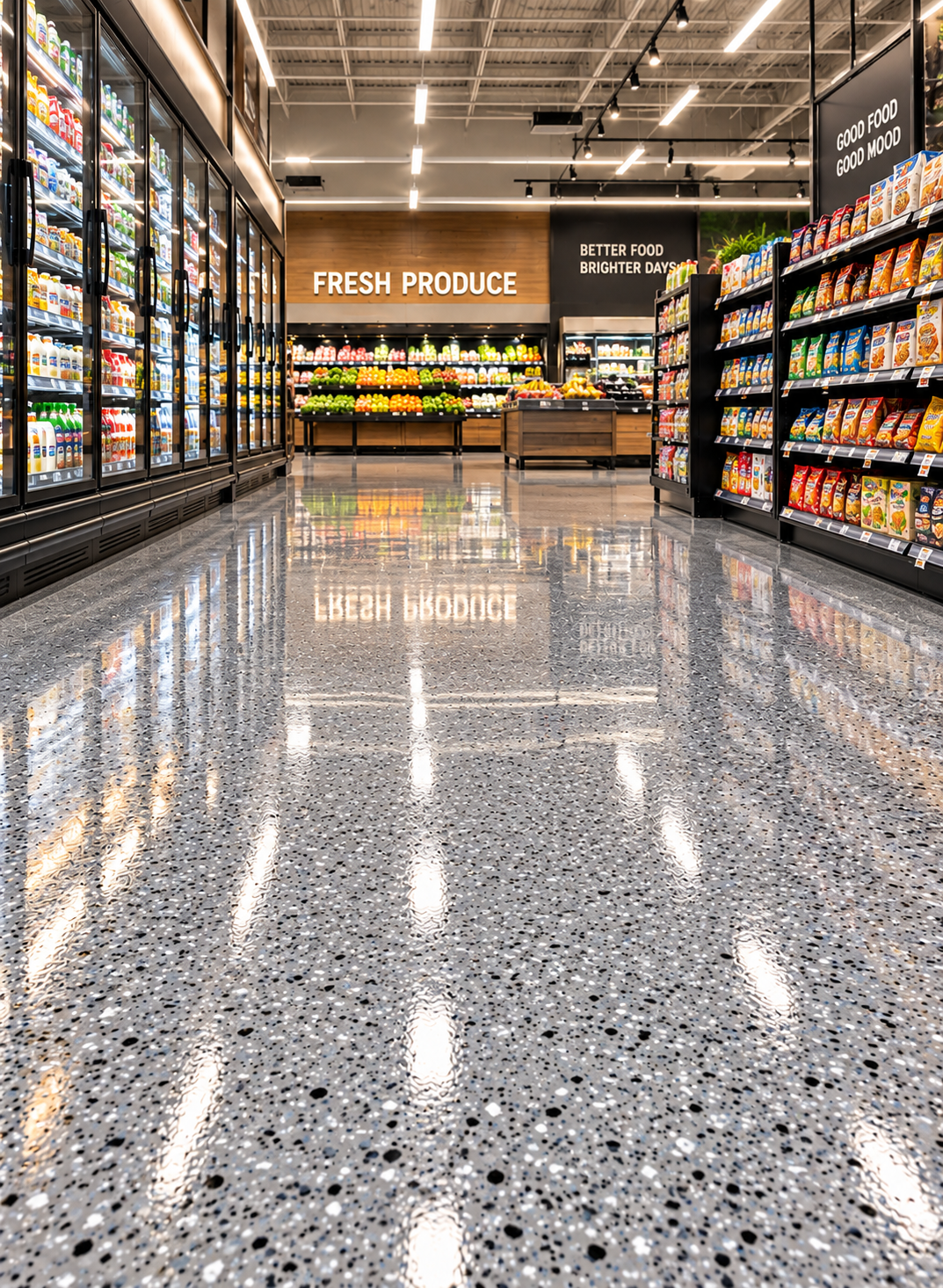
Retail, hospitality, studio, salon, showroom, and creative business environments may use metallic floors to reinforce a distinctive visual identity. Traffic and slip-resistance requirements should still guide the protective topcoat.
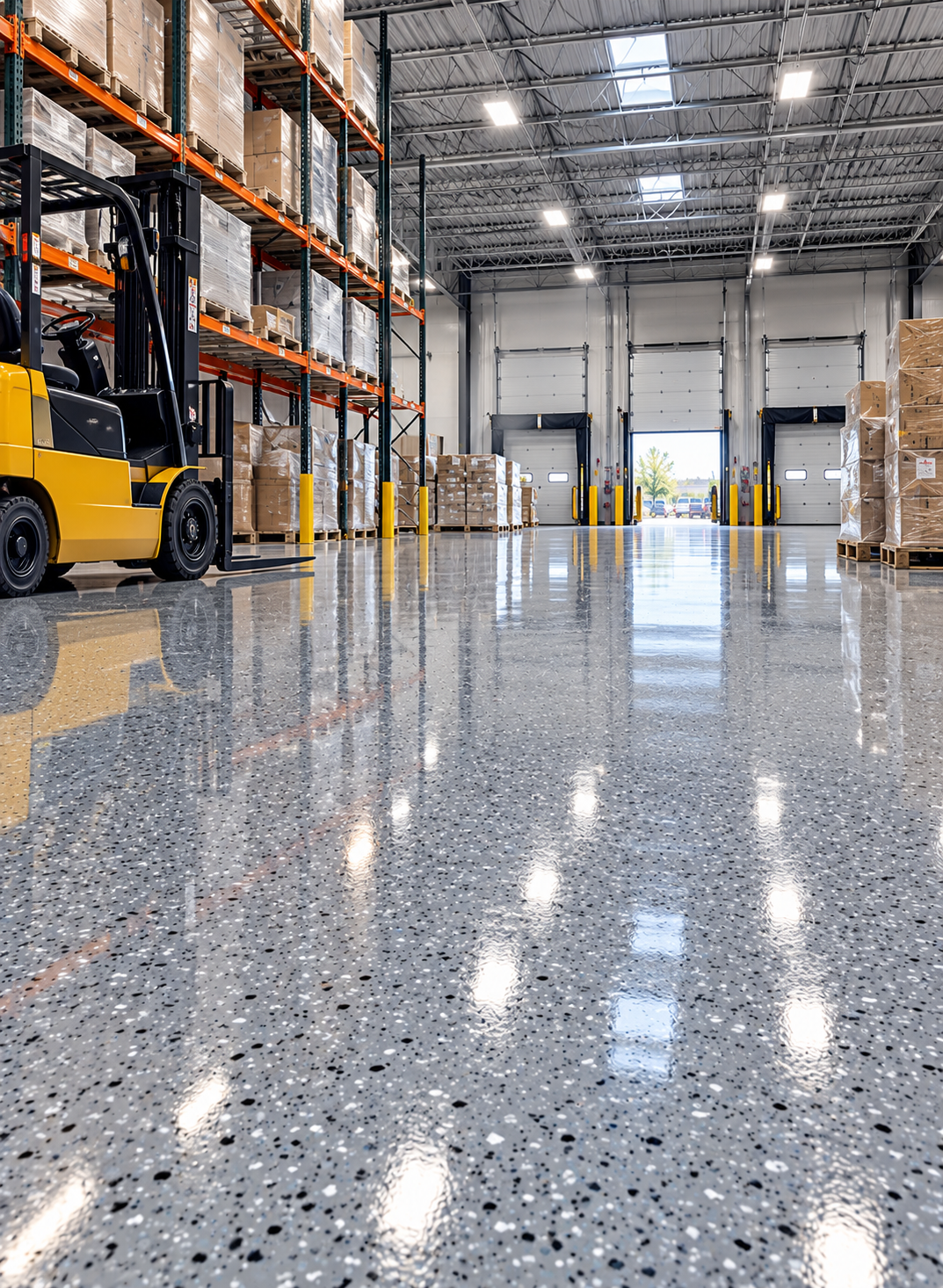
Commercial projects benefit from documenting operating conditions before material is selected. A contractor may need to know what rolls across the floor, what can spill on it, how often it is cleaned, whether hot water or aggressive cleaners are used, whether customers see the floor, and how long the area can be out of service.
Traffic patterns deserve special attention. Turning wheels, concentrated loads, impacts, thresholds, loading points, entrances, and transition areas can wear differently than open floor space. In many facilities, the best specification is a system designed around the harshest realistic exposure rather than the average exposure.
Safety and maintenance also matter. More texture can improve traction, but heavily textured floors may take more effort to clean. Smooth glossy finishes are easier to wipe but may be less forgiving when wet. A professional recommendation should balance these competing priorities.
Common Applications and Project Goals
Customers considering metallic epoxy flooring often want to address one or more practical goals: improve the look of bare concrete, make cleanup easier, reduce surface dusting, create a more finished room, add texture, protect against routine wear, organize work areas with color, or shorten the disruption associated with a flooring upgrade.
The service can be appropriate for showrooms, studios, salons, offices, entertainment spaces, finished garages, hobby rooms, select retail environments, and residential interiors where a dramatic seamless concrete finish is desired. Suitability should always be confirmed for the individual slab and environment. Existing coatings, moisture, cracks, soft concrete, contamination, exterior exposure, and drainage can change what preparation or materials are appropriate.
Another common goal is visual consistency. Concrete can vary in color and texture from one pour or repair area to another. A pigmented or broadcast coating can create a more unified appearance. Decorative systems can also make dust and minor visual wear less noticeable than a perfectly uniform monochrome surface.
Property owners should decide which priorities are essential and which are preferences. For example, a fast return to service may be essential for a business but less important in a spare residential room. An outdoor patio may place UV stability and wet traction ahead of mirror-like gloss. Clear priorities lead to better material choices.
Designing a Metallic Floor
Metallic flooring is closer to decorative finishing than to applying a uniform paint color. Installers may use multiple pigment colors and controlled movement to create veins, clouds, waves, or marbled effects. The wet material continues to move before it cures, contributing to the floor's unique character.
Lighting dramatically changes the result. Overhead LEDs can emphasize gloss and depth, while natural side light can reveal movement and surface variation. A color combination that looks subtle in a small sample may appear much more dramatic across an entire room.
Because the finish is visually expressive, repairs can be harder to disguise than on a flake floor. Customers should understand that future patches may not reproduce the exact original pigment movement. Protecting the finish and choosing an appropriate topcoat are therefore important.
Materials, Systems, and Finish Options
Options for metallic epoxy flooring may include marbled effects, flowing color transitions, pearlescent pigments, subtle two-tone movement, high-contrast artistic designs, gloss clear coats, and protective topcoats selected for traffic and light exposure. Resin flooring is a system, not just a single can of coating. Primers, base coats, broadcast media, build coats, and topcoats may use different chemistries because each layer has a different job.
Epoxy is widely used for primers, build coats, decorative systems, and high-build flooring because it can provide strong adhesion and a substantial film. Polyaspartic materials are often selected where fast curing and UV stability are priorities. Polyurea-based products can also provide rapid cure and toughness, but their properties vary by formulation.
The exposed topcoat is especially important because it receives abrasion, sunlight, chemicals, and cleaning. Decorative aggregates such as vinyl flakes or quartz can add visual texture and change the floor's traction and wear characteristics. Anti-slip aggregate can also be incorporated into selected coats. More texture is not automatically better; the right level depends on wet conditions, footwear, cleaning equipment, and how the space is used.
Color should be evaluated under realistic lighting. Very dark glossy floors can show dust, scratches, and tire marks more readily, while highly mottled or flake-heavy floors can visually hide everyday debris. The most attractive sample is not always the easiest floor to live with, so maintenance expectations should be part of the design conversation.
A Typical Professional Installation Process
1. Consultation and use assessment. The project begins by identifying the room's function, traffic, exposure, appearance goals, and schedule. This helps narrow the system choices before work begins.
2. Concrete evaluation. The slab is checked for existing coatings, contaminants, cracks, spalls, weak surface material, moisture concerns, and other conditions that may affect adhesion or performance.
3. Surface preparation. Professional systems commonly rely on mechanical profiling such as diamond grinding or shot blasting, with the method selected to suit the coating thickness and substrate. Dust and debris are removed so the surface is ready to receive the system.
4. Repairs and detail work. Cracks, damaged areas, edges, transitions, penetrations, and joints are addressed as appropriate. Some joints are designed to move and should not simply be buried under a rigid coating.
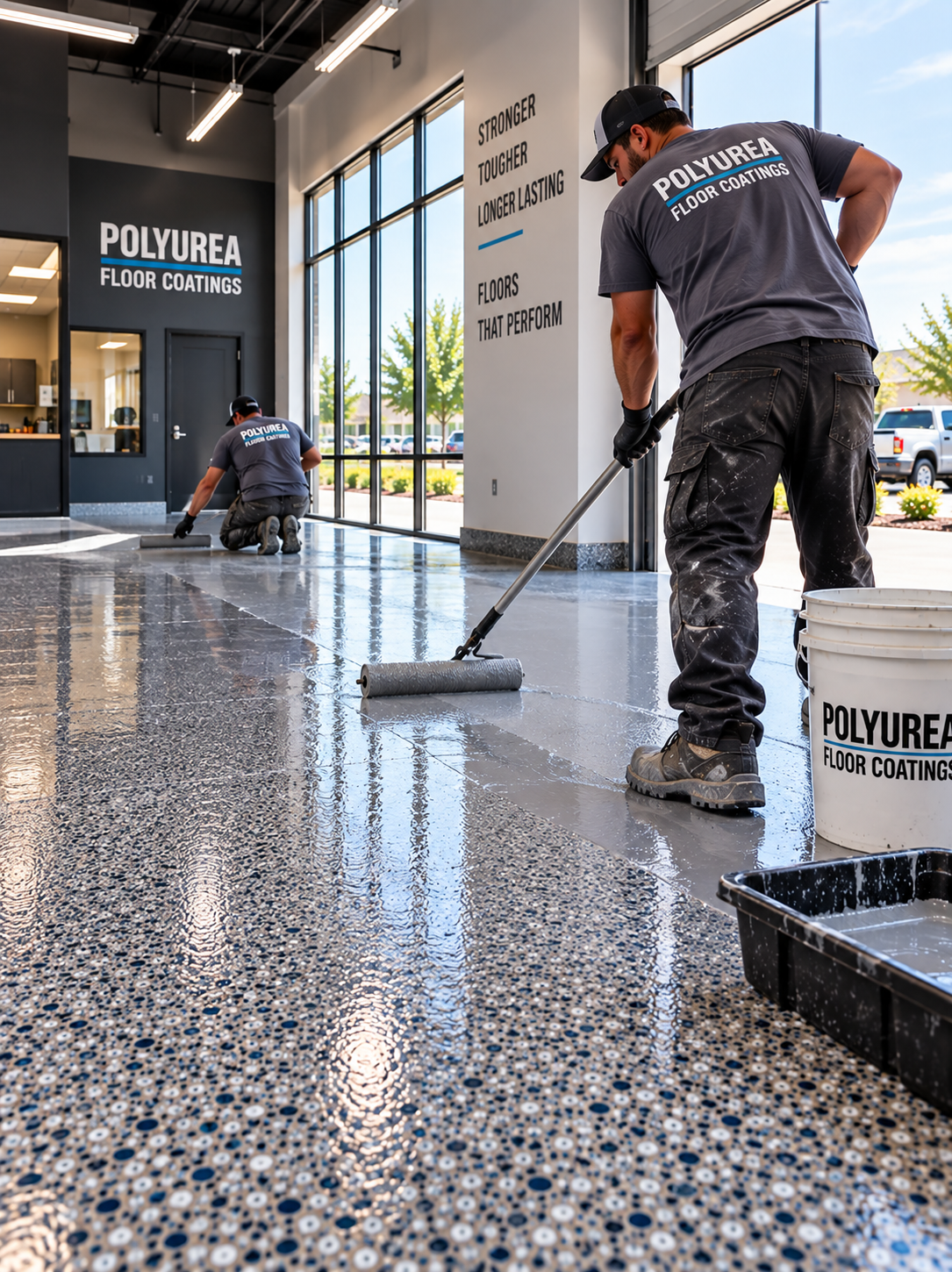
5. Coating installation. Primer or base layers are mixed and applied according to the chosen system. Decorative aggregate or flakes may be broadcast while a layer is wet. Additional coats are installed within specified recoat windows.
6. Topcoat and texture. The final exposed coat is selected for wear, appearance, UV exposure, chemical resistance, and traction. Aggregate may be added when additional slip resistance is desired.
7. Cure and return to service. The floor must be protected while it cures. Light foot traffic, furniture, vehicles, forklifts, washing, or chemical exposure may each have different waiting periods. Product-specific instructions should control the schedule.
Why Surface Preparation Matters
Surface preparation is one of the most important parts of a resin-flooring project. Coatings need to bond to sound concrete, not to dirt, weak laitance, oil, old sealer, or an incompatible previous coating. A floor can look clean to the eye and still be poorly prepared for resin.
Industry guidance commonly describes concrete surface texture using Concrete Surface Profile, or CSP, ranges. The required profile depends on the type and thickness of the system. Mechanical methods such as grinding, shot blasting,
or scarifying can both remove surface contaminants and create the texture needed for mechanical bond.
Moisture also deserves attention. Water vapor moving through a slab can contribute to blistering or loss of adhesion in some systems. The correct response depends on the slab, building conditions, drainage, vapor barrier, coating chemistry, and test results. A responsible contractor should not promise that every slab can be coated successfully without evaluation.
Preparation is also where many aesthetic problems are prevented. High spots, patch edges, old coatings, cracks, and rough repairs can telegraph through a finished floor. Spending time on the substrate often produces a better-looking
and more durable result than adding another decorative layer later.
Why Professional Metallic Epoxy Flooring Installation Matters
Resin coatings are sensitive to proportioning, mixing, temperature, humidity, substrate condition, recoat windows, and application thickness. Fast-curing materials can become especially unforgiving because installers may have only a short working period to mix, spread, back-roll, broadcast, and maintain wet edges.
Professional equipment can also make a meaningful difference. Concrete grinders, shot blasters, industrial vacuums, crack-repair tools, mixing equipment, gauge rakes, squeegees, rollers, and spiked shoes are used for specific purposes. The installation method should fit the system rather than forcing every project into the same tool set.
DIY kits may be appropriate for some owners who accept the risk and limitations, but problems often arise when preparation is reduced to light cleaning or acid etching regardless of slab condition. A coating that peels under tires or delaminates from contamination can be more expensive to remove and replace than doing the preparation correctly at the beginning
Price should therefore be compared in context. Two proposals that use different preparation methods, layer counts, thicknesses, topcoats, repair allowances, or cure schedules are not equivalent simply because both are described as an epoxy or concrete coating.
Choosing a Metallic Epoxy Flooring Contractor in McKinney, TX
Ask each contractor to explain the complete system in plain language. You should understand how the concrete will be prepared, how cracks and joints will be handled, what each layer is, what texture is planned, and how long the floor must cure before different types of use.
Request product-specific information when performance is important. Terms such as epoxy, polyurea, and polyaspartic describe broad chemistry families, not identical products. For demanding commercial, exterior, chemical, or fast-return projects, the data for the actual materials matters.
Discuss moisture and contamination early. If the floor has persistent dampness, hydrostatic concerns, oil saturation, old adhesives, unknown sealers, or repeated coating failure, those facts should influence the plan. A contractor who asks detailed questions is more useful than one who assumes every slab is the same.
Compare the scope, not only the bottom-line price. Surface preparation, repairs, number of coats, broadcast rate, topcoat, square footage assumptions, moving contents, edge details, and cure protection can all affect value. The clearest proposal is usually the one that makes it easy to understand what is and is not included
Why Consider McKinney Epoxy Flooring Pros
McKinney Epoxy Flooring Pros is positioned to help customers evaluate garage floor coatings for homes and businesses in the McKinney area. The focus should be on matching the floor system to the concrete, the environment, the desired appearance, and the customer's practical priorities.
Customers benefit from a consultative approach that explains tradeoffs instead of reducing the decision to a single coating label. Fast cure, UV stability, gloss, texture, chemical resistance, decorative style, and budget can pull a project in different directions. Clear communication helps identify which features matter most.
We do not need to make unsupported promises to explain the value of professional flooring work: careful preparation, compatible materials, disciplined installation, and realistic cure expectations are the foundation of a successful project. A detailed estimate should give you the information needed to compare options confidently.
Frequently Asked Questions
What creates the metallic effect?
Special metallic pigments are dispersed in resin and manipulated during application. As the material flows and cures, it creates movement, depth, and marbled or cloud-like effects.
Will my metallic floor look exactly like a sample?
No two installations are identical. Samples are useful for choosing a palette and general style, but pigment movement and hand application create natural variation.
Can metallic epoxy be used in a garage?
It can be used in some garages, but customers should consider tire traffic, sunlight, traction, and the visibility of scratches or dirt. Decorative flake may be more forgiving for some working garages.
Is metallic epoxy slippery?
A smooth high-gloss finish can be slippery when wet. Traction additives or different finish choices can improve grip, although they may alter the visual depth and feel.
Does metallic epoxy need a clear coat?
Many systems use a protective clear coat to improve wear, chemical resistance, or UV performance. The appropriate topcoat depends on the environment.
Can metallic epoxy hide damaged concrete?
It can disguise some visual imperfections, but the substrate still needs to be sound. Cracks, spalls, contamination, and moisture concerns should be corrected or addressed first.
How do I choose colors?
Consider the room's lighting, wall colors, cabinetry, furnishings, and desired contrast. Subtle palettes tend to be calmer, while high-contrast combinations emphasize movement.
How should metallic epoxy be cleaned?
Use routine dust removal and non-abrasive cleaning methods appropriate for the topcoat. Avoid harsh practices that can dull or scratch a glossy finish.
Have a differint Question?
Request an Estimate for Garage Floor Coatings in McKinney
If you are planning garage floor coatings in McKinney, TX, contact McKinney Epoxy Flooring Pros to discuss your
concrete, the way the space is used, the appearance you want, and the installation schedule. A useful estimate should
help you understand preparation, system options, finish choices, cure expectations, and the factors that influence
long-term performance.
Bring questions. If you are comparing epoxy, polyaspartic, polyurea, decorative flake, or another concrete-coating
approach, the goal is to choose a system that makes sense for your property rather than simply selecting the most
familiar product name. Request a consultation or estimate to begin planning your floor